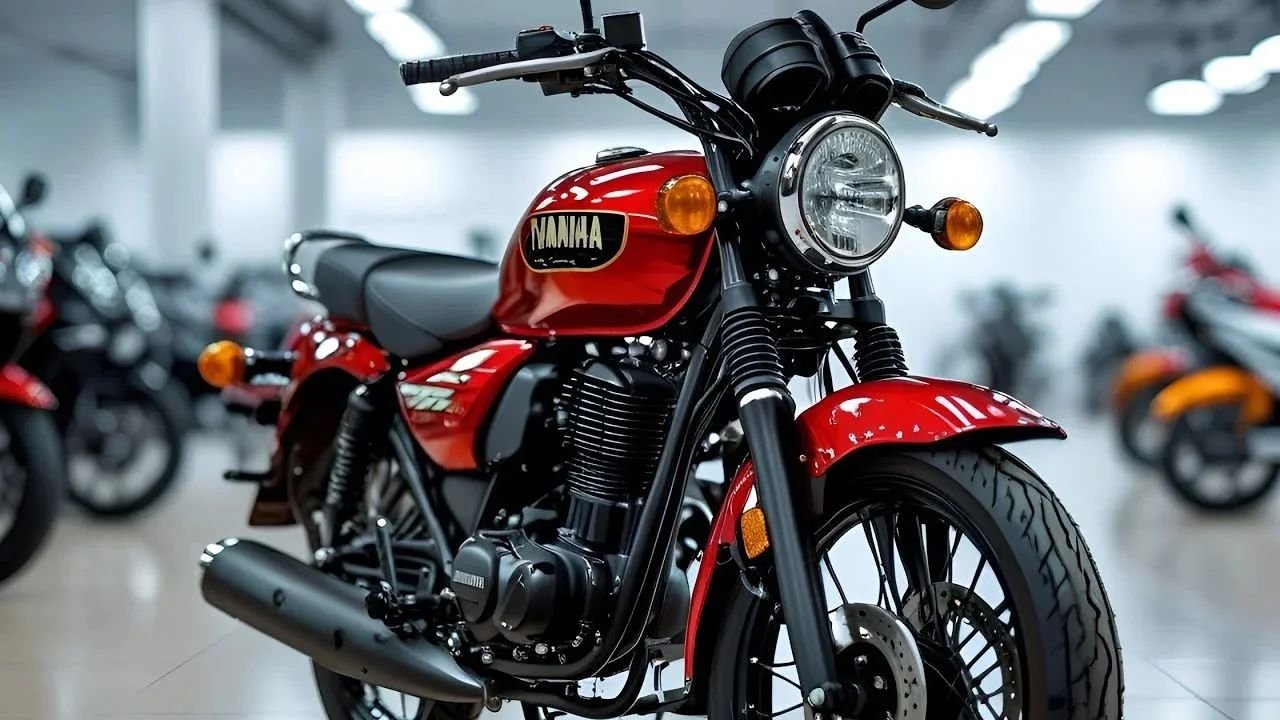

In the ever-evolving world of motorcycles, where new models come and go, only a few manage to etch their names permanently into the hearts of riders. One such icon is the Yamaha RX100. First introduced in India during the mid-1980s, the Yamaha RX100 quickly rose to legendary status, captivating riders with its unmatched combination of performance, design, and raw mechanical charm. It wasn’t just another motorcycle; it became a cultural symbol—a machine that represented speed, rebellion, and sheer riding pleasure.
Decades after its discontinuation, the Yamaha RX100 continues to thrive in the memories and garages of passionate enthusiasts. For many, it wasn’t just a two-wheeler; it was an emotion. In this article, we take a nostalgic deep dive into the story of the Yamaha RX100, exploring why it remains one of the most iconic motorcycles in Indian history and how it still influences biking culture today.
Yamaha RX100 – Key Specifications at a Glance
| Feature | Details |
|---|---|
| Engine | 98cc, air-cooled, 2-stroke |
| Power Output | Approx. 11 HP |
| Transmission | 4-speed manual gearbox |
| Weight | Around 100 kg |
| Top Speed | Nearly 100 km/h |
| Brakes | Front & rear drum brakes |
| Fuel Efficiency | 25–30 km/l |
| Suspension Setup | Telescopic forks (front), twin shock absorbers (rear) |
| Production Years | 1985–1996 |
| Legacy | Lightweight, powerful, and iconic |
The Dawn of an Icon: Why the Yamaha RX100 Was a Game-Changer
Back in 1985, the Indian two-wheeler market was largely dominated by underpowered, fuel-efficient machines meant primarily for commuting. Then came the Yamaha RX100, shattering stereotypes and raising the bar. With its robust two-stroke engine, the RX100 offered blistering acceleration that completely transformed how people perceived small-capacity motorcycles.
Unlike its contemporaries, which often lacked soul or excitement, the Yamaha RX100 was thrilling to ride. Its engine, though small on paper, delivered a sudden burst of power as the throttle twisted, providing an adrenaline rush unlike any other 100cc bike at the time. This instant throttle response, coupled with a feather-light body, made it a rocket on wheels for that era.
The Sound of Rebellion: A Motorcycle That Spoke Volumes
Perhaps one of the most memorable traits of the Yamaha RX100 was its unmistakable exhaust note. That sharp, raspy growl was more than just a mechanical by-product—it was a call for attention. Whether revving through narrow city lanes or roaring down open highways, the sound of the RX100 turned heads and stirred hearts.
In a time before superbikes became commonplace, the RX100 gave riders a sense of speed and power without breaking the bank. And that sound—it wasn’t just noise. It became the voice of a generation of riders who craved freedom, excitement, and individuality.
Light, Nimble, and Incredibly Fun
The weight of a motorcycle plays a critical role in its performance and maneuverability. This is where the Yamaha RX100 truly shined. Weighing just about 100 kg, it was a breeze to handle. Whether you were weaving through traffic or navigating sharp turns, the bike felt like an extension of your body.
Its chassis, though simple in construction, was finely balanced. The low center of gravity combined with its peppy engine made it ideal for both city riding and spirited bursts on open roads. Young riders, in particular, found it exhilarating, thanks to its playful and forgiving nature.
The ergonomic riding position, intuitive controls, and comfortable seat made it suitable for riders of all ages and experience levels. For many, their very first ride was on the Yamaha RX100, and they never looked back.
A Design That Stood the Test of Time
While modern motorcycles boast aggressive lines, digital dashboards, and flashy decals, the charm of the Yamaha RX100 lies in its timeless simplicity. It had a compact, muscular fuel tank with bold graphics, a single round headlamp, chrome-finished mudguards, and a lean stance that emphasized function over form.

Every line on the RX100 served a purpose. There was no unnecessary bodywork or plastic fairing—just raw metal, polished chrome, and purposeful design. Whether in red, black, or blue, the RX100 exuded a vintage charisma that few bikes today can match.
This aesthetic appeal continues to inspire custom builders and restoration experts who work tirelessly to preserve or reinvent the RX100’s classic look with modern twists.
Mechanical Excellence in Simplicity
Technology-wise, the Yamaha RX100 might seem basic today, but that simplicity was part of its enduring charm. It had no fuel injection, ABS, or electronic gadgetry. Instead, it relied on mechanical purity. The two-stroke engine was easy to understand and even easier to fix. Tinkering with the carburetor, cleaning the exhaust, or replacing spark plugs became weekend rituals for RX100 owners.
Also Read : Royal Enfield Classic 350: Launched with Bahubali Engine, Timeless Design & Riding Soul
Its 4-speed gearbox was smooth, and the gear ratios were perfectly matched for rapid acceleration. Suspension duties were handled by telescopic front forks and dual rear shock absorbers, offering decent comfort for daily use. Drum brakes at both ends, though outdated by today’s standards, were effective for the bike’s lightweight body and performance.



For its time, the Yamaha RX100 was a perfect blend of performance, reliability, and low-cost maintenance.
A Cult Following That Never Died
Though its production ceased in 1996, the Yamaha RX100 has never truly disappeared. On the contrary, it has grown into a cult phenomenon. Across cities and towns in India, you’ll find dedicated workshops that specialize in restoring and customizing RX100s. Online forums and social media groups are buzzing with owners sharing tips, memories, and restoration stories.
Collectors often hunt down original models, especially those with matching engine and chassis numbers, factory paint jobs, and unmodified parts. In fact, a well-restored Yamaha RX100 can now fetch between ₹80,000 to ₹1.5 lakh or more in the pre-owned market—an impressive value for a bike that originally cost less than ₹20,000.
RX100 in Indian Motorsports
The legacy of the Yamaha RX100 also extended to motorsports. In the late 80s and early 90s, it became a staple at drag races and amateur racing circuits. Its explosive acceleration and tunable engine made it ideal for high-performance mods. Tuners pushed its performance beyond factory limits, and it wasn’t uncommon to see RX100s outrunning bikes with much larger engines.
Its lightweight frame, combined with precise handling, gave racers an edge. Even today, modified RX100s with expansion chambers and performance carbs participate in retro racing events across the country.

Common Questions About the Yamaha RX100
1. Why was the Yamaha RX100 discontinued?
Due to tightening emission regulations in the mid-90s, two-stroke engines like the RX100 couldn’t meet new environmental standards. Yamaha chose to discontinue it and focus on cleaner four-stroke models.
2. Can you still buy a Yamaha RX100 today?
While it’s no longer in production, you can find restored or used RX100s in the second-hand market. However, original models in good condition are becoming increasingly rare and expensive.
3. Is the Yamaha RX100 suitable for daily use today?
Yes, but with caveats. While it’s reliable, regular maintenance is essential due to its age. Also, finding authentic parts can be challenging in some regions.
4. Why was the RX100 considered so fast?
The two-stroke engine offered quick torque delivery and minimal friction. Paired with its low weight, it provided an outstanding power-to-weight ratio, making it quicker than most rivals in its class.
Will the Yamaha RX100 Make a Comeback?
Over the past few years, there have been strong rumors and even official hints from Yamaha that the RX100 might return in a new avatar. However, bringing back such a legendary name comes with significant responsibility. A modern Yamaha RX100 would need to meet current emission norms, safety standards, and customer expectations without compromising the soul of the original.
Whether Yamaha will revive it as a 4-stroke retro-themed commuter or a performance-oriented lightweight bike remains to be seen. But one thing’s for sure: if the RX100 is reborn, it will draw a massive crowd of both loyalists and curious new-age riders.
Final Thoughts: A Machine That Became a Movement
The Yamaha RX100 was never just another motorcycle on the road—it was a revolution on two wheels. It changed how Indian riders viewed motorcycles, pushing the envelope of what a 100cc bike could achieve. From college students to seasoned racers, everyone had a story connected to the RX100.
Even after nearly three decades, its spirit lives on—in garages, racing pits, collector’s homes, and, most importantly, in the hearts of riders. If you ever get a chance to ride a Yamaha RX100, seize it. Because in that brief ride, you’ll feel a connection to an era where riding was all about joy, simplicity, and raw, unfiltered freedom.
Some Important Link
| Download News APP | Click Here |
| WhatsApp Group | Click Here |
| Home Page | Click Here |