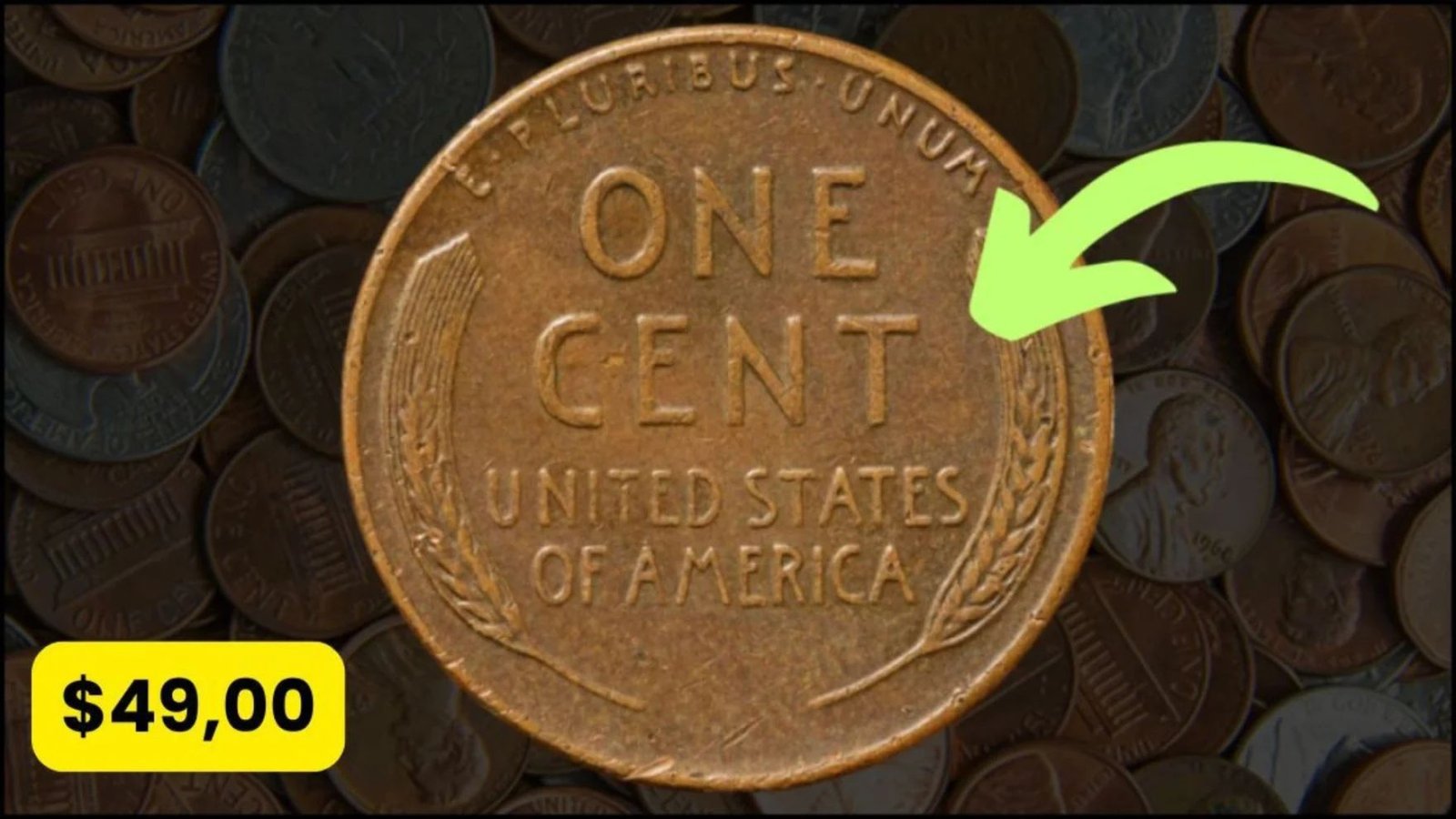

Every now and then, a simple object from the past resurfaces and captures the imagination of collectors, historians, and everyday people alike. In the world of numismatics — the study and collection of coins — few pieces have managed to stir as much excitement in recent years as the Lincoln Wheat Penny.
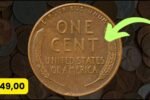
Once just a humble copper coin exchanged for candy at the corner store or saved in a child’s piggy bank, this penny has now become a symbol of both American history and the thrill of hidden treasure. Recently, one particular variety of the Lincoln Wheat Penny made headlines for selling at auction for an astonishing $49,000. That’s right — a coin originally worth just one cent is now valued higher than some brand-new luxury cars.
The big question is — could there still be one hiding in your change jar or rattling around in your dresser drawer?
A Penny Steeped in History
The Lincoln Wheat Penny first rolled off the presses in 1909, introduced to mark the 100th anniversary of President Abraham Lincoln’s birth. At the time, it was a groundbreaking change in U.S. coinage. Before this coin, American coins typically featured allegorical figures like Liberty, not actual historical individuals.
The U.S. Mint decided Lincoln was the perfect figure to break that tradition. Designed by Victor David Brenner, the obverse (front) proudly displayed Lincoln’s portrait, while the reverse (back) featured two stylized wheat stalks flanking the words “ONE CENT” — hence the nickname “Wheat Penny.”
From 1909 until 1958, the Lincoln Wheat Penny remained in production, circulating in vast quantities across the country. While most were made in copper and saw heavy everyday use, a handful of rare versions — often created due to minting errors — have become incredibly valuable over time.
The $49,000 Lincoln Wheat Penny
So what makes a small copper coin command a price tag of $49,000 or more? The answer lies in a rare wartime error from 1943.
During World War II, copper was a critical war material, used extensively for wiring, ammunition, and other military needs. To conserve this metal, the U.S. Mint switched from copper to zinc-coated steel for pennies in 1943. These steel cents had a silver-gray appearance and were magnetic — a stark contrast to the warm copper tone Americans were used to.
However, a tiny number of 1943 Lincoln Wheat Pennies were mistakenly struck using leftover bronze planchets (blanks from the previous year). These bronze versions should never have existed — and that error is what makes them so valuable today.
Only a few dozen authentic 1943 bronze Lincoln Wheat Pennies are known to exist. Condition, mint mark, and provenance can affect value, but one such coin fetched $49,000 at auction, and others have sold for even higher amounts when in pristine condition.
Other Valuable Lincoln Wheat Pennies
While the 1943 bronze penny gets most of the headlines, it’s not the only Lincoln Wheat Penny worth serious money. Collectors prize several other varieties, some of which can sell for thousands of dollars:
- 1955 Doubled Die Obverse – This coin is instantly recognizable because of its dramatic doubling on the date and the inscriptions “LIBERTY” and “IN GOD WE TRUST.” The doubling is visible to the naked eye, making it one of the most famous and sought-after mint errors in U.S. coin history. Depending on condition, these coins can sell anywhere from $1,000 to $50,000.
- 1909-S VDB – This was part of the very first Lincoln Wheat Penny production run in San Francisco. The “VDB” initials (Victor David Brenner) appear prominently at the bottom of the reverse, a feature quickly removed after public criticism. Fewer than half a million were minted, and high-grade examples can fetch thousands.
- 1922 No D Mint Mark – Produced in Denver, this penny lost its mint mark due to over-polishing of the die. While subtle, it’s a recognized variety that sells for significant sums among collectors.
- 1944 Steel Penny – Similar to the 1943 bronze error, a few 1944 pennies were accidentally struck in steel when production should have reverted to copper. These are also extremely rare and valuable.
Could a Rare Lincoln Wheat Penny Still Be in Circulation?
The thought of a coin worth tens of thousands lurking in everyday pocket change is exciting — and while the odds are slim, it’s not completely impossible.
Even though most valuable Lincoln Wheat Pennies have been plucked out of circulation by collectors over the decades, millions of pennies from the first half of the 20th century are still out there. Some hide in old coin jars, some are passed down in family collections, and a few could still appear in cash transactions.
If you’re curious, here are three quick tips to spot potentially valuable Wheat Pennies:
- Test 1943 Pennies with a Magnet – A genuine 1943 steel cent will stick to a magnet, while a rare 1943 bronze cent will not.
- Check for Doubling – Examine 1955 pennies closely for doubled lettering or numbers.
- Look for the “S” and “VDB” Combo – If you find a 1909 penny with both a San Francisco mint mark (“S”) and the designer’s initials “VDB,” you might be holding something rare.
Why Collectors Love the Lincoln Wheat Penny
The Lincoln Wheat Penny is more than just a piece of currency — it’s a slice of American history you can hold in your hand. It represents a pivotal shift in U.S. coinage design, it ties directly to one of America’s most revered presidents, and it carries stories from times of peace and war.
For collectors, Wheat Pennies are the perfect blend of accessibility and potential rarity. You can start a collection with common-date coins found in circulation for face value, but there’s always the thrill of possibly uncovering a high-value rarity.
Preserving and Valuing Your Lincoln Wheat Penny
If you think you’ve found a rare Lincoln Wheat Penny, the first rule is don’t clean it. Cleaning coins — even gently — can dramatically reduce their value. Instead, store the coin safely in a protective holder and consult a reputable coin dealer or grading service such as PCGS (Professional Coin Grading Service) or NGC (Numismatic Guaranty Company).
These services can authenticate the coin, assign it a grade based on condition, and give you an accurate market value. For rare varieties like the 1943 bronze or 1955 doubled die, professional authentication is essential before attempting to sell.
The Allure of Small Change with Big Value
Stories about everyday people stumbling upon valuable Lincoln Wheat Pennies keep the fascination alive. Someone sorting through a relative’s old coin jar, a lucky yard sale find, or even change from a vending machine — these scenarios continue to inspire treasure-hunting excitement.
The reality is that most Wheat Pennies are worth only a few cents to a couple of dollars, depending on age and condition. But the dream of discovering that one extraordinary piece — the $49,000 coin or a mint-error gem — is what keeps collectors looking.
Final Thoughts
The Lincoln Wheat Penny serves as a powerful reminder that history, artistry, and value can all be packed into something as small as a coin. From its debut in 1909 honoring Abraham Lincoln, to rare wartime errors worth tens of thousands, this coin’s journey is a fascinating blend of design, culture, and chance.
While the odds of finding a $49,000 Wheat Penny in your change are slim, the possibility — however small — adds a spark of adventure to an otherwise ordinary moment. The next time a penny crosses your palm, take a closer look. You never know — your “lucky penny” could turn out to be one of the most valuable coins in American history.
FAQs: The Lincoln Wheat Penny Worth $49,000 — Could It Still Be Out There?
1. Why is the Lincoln Wheat Penny worth so much?
Certain rare varieties, such as the 1943 bronze Lincoln Wheat Penny and the 1955 doubled die, are valuable due to minting errors and historical significance.
2. How can I tell if I have a rare Wheat Penny?
Check the date, mint mark, and look for unusual features like doubling or non-magnetic 1943 coins.
3. Are valuable Lincoln Wheat Pennies still in circulation?
It’s extremely rare, but not impossible. Always check old change, inherited coin jars, and even flea market finds.
Some Important Link
| Download News APP | Click Here |
| WhatsApp Group | Click Here |
| Home Page | Click Here |